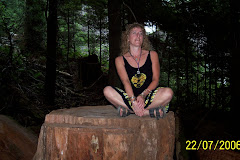
Somebody very innocently asked me the other day how work was for me. And I glibly responded "Just a normal day...some child sexual abuse, a dead baby, parent / teen conflicts, drug addicted parents, and a little domestic violence". The person asking was shocked - his response "Oh my god, how do you stand it?"
How do I? Stand it, I mean. I'm not sure. It's a day in the life of a child protection worker, and we just stand what we have to stand. I easily forget that what is completely shocking and appalling to some people is everyday life for me. Every day that I go to work, I hear some of the worst stories that are possible to hear. They're sad and painful and gross and simply horrible. And I've normalized them.
It's time to leave, soon. Time to leave this job. When I first started working in child protection (it's been about 12 years at the time of writing), I prided myself in my ability to hold strong boundaries. When I left work at the end of the day, for the most part, I left work. That is, I was able to put the stories behind me and go home to my own family, my own life, my own story.
Over the past couple of years, though, I'm having a harder time walking away from the stories in other people's lives. I experience greater emotion when I hear the stories. My eyes fill with tears at someone's sad story; I worry more about the kids that are wandering the streets; I fear more for my own safety. I wonder if I'm becoming burned out. A good friend suggested that most people, when they become burned out, stop having empathy...they stop caring. I'm having the opposite experience - I'm feeling more and more.
My spiritual path, over the past few years has been about opening my heart wider and wider. My meditations involve opening my heart; my interactions in my private life are about opening my heart. My prayers are about having an open heart. And to be a good child protection worker, I think it's important to be able to put a wall around my heart.
It seems that my daily practice has created a barrier to the healthy completion of my job.
Wednesday, May 28, 2008

Saturday, May 24, 2008
Growing up in a Farm Family
When I was six years old, my family moved to the Family Farm. We'd been living in Slave Lake at the time, and my dad was working as a truck driver. My mom was a traditional stay at home mom. We moved during the Easter holidays. My sister was seven years old and my brother was five. My other brother was still a baby.
The farm was where my dad had spent his growing up years. The land was offered to my grandparents when my grandpa returned from WWII as part of the Veteran's Assistance program. Veterans were offered homesteading land at bargain basement prices so that they could re-establish their lives. My grandpa never wanted to farm - he was a cowboy not a farmer (there's a difference, you know). He told me once that if he could have been a career soldier he might have chosen that path. But he returned from the war like many men in that era - damaged and silent. And my grandmother did what the majority of women did in those days - she stood by her man and followed him where ever he went.
I don't actually know how it came to pass that my parents decided to start farming with my grandparents. I only know that my grandparents moved out of the house that they'd lived in and moved into an older, smaller one in the yard. And we moved into their house.
My parents weren't dissimilar to my grandparents. They both loved (love) the land and the rural life. They grew up within miles of each other, met, and fell in love at a young age. They married very young; they had kids very young. And they farmed and ranched. My dad was, and continues to be, happiest when he was riding the land on his horse. My mom was, and continues to be, happiest when she was around her family. Both of my parents dedicated their lives to the raising of a rural family with rural values and rural love.
I'm thinking about this today because I've had a couple of friends challenge some ranching methods. It's right to challenge the way things "have always been done". Except that they aren't the way they've always been done. I was thinking about why I was feeling defensive with their questions/comments. And I realize that I'm experiencing some of the same foreboding that my parents are experiencing. It's the risk of the loss of the family farm. Not the loss of the land, so much, as the loss of the lifestyle.
Agribusiness is taking over farming and the cattle ranching business. I know that my parents have been and continue to be ethical cattle ranchers. When you buy beef from my family you know what you're getting, unlike when you buy beef from your local grocery store. When calves are born in the spring, my dad is out walking through the herds, talking to the cows and watching to see how they're doing. He's up every couple of hours in the night to monitor. When he's too tired, my mom goes with him. If it's cold, they make sure that the calves are born in a warm, sheltered place. They know each cow and calf in their operation.
When I was a little girl, during calving season it wasn't unusual to have a new born calf brought into the house. One that had been born during a cold snap and needed to be warmed. We would put the hair dryers on them, and rub them with rags to try to warm them and get their blood circulating. If a cow rejected her calf, the calf would be nurtured and bottle fed until it could find an adoptive mother (usually one whose calf died).
Every spring it was time to move the cattle to pasture. The cows that remained with our family for several years would remember the process. As the weather warmed, and the grass started to green, the cows would start searching the fence lines for a way out. When it's time to make the move, there has to be a process. This involved and continues to involve vaccinating the calves (in the same ways that human babies are vaccinated), castrating the bull calves (this is what the beef industry wants), and branding and tagging. Now, my parents no longer brand the calves. They put a numbered ear tag on them (like getting your ears pierced). Castration no longer involves cutting the calves but putting a rubber band around their testicles to stop the blood supply. The testicles dry up and that's the end of it.
The cows know that it's time to move, and they become very excited.This year, when they saw the horses being saddled up, they began to beller and gather themselves together in anticipation. The cowboys who get to participate in the cattle drive also get excited. The horses love it; the dogs love it; the cattle love it; and the people love it. The cattle spend the summer wandering freely around hundreds of acres of grass land, watered by creeks and the river.
In the fall, the cows are ready to come home. At the time that the grass is no longer growing the cattle are brought home. Here they spend the winter on a couple of hundred acres of farm land, being fed hay throughout the winter. They're offered shelter from the elements and closely watched over. Before winter, most of the calves are weaned and sent to market. Often they leave this truly wonderful life behind and go to a feedlot for fattening. This is what the market requires. The feedlots are owned usually by Agribusiness.
The family farm is a dying breed. With Agri-business taking over increasing portions of the market share; with American embargoes on beef imports that have very little to do with health concerns and a great deal to do with controlling the market, the business of the small family farm is becoming increasingly less viable. Over the past 50 years, most cattle farmers have had to support their operations by having one or both partners working off the farm, at least for part of the year. For most of my childhood, my dad went away in the winters to work on the oil rigs, leaving my mom to look after their five children, and all of the cows and animals. She also had a job in town for a good portion of those years. It was no easy life.
And yet they continue. With no guarantee that any of their children will take over the operation when they retire, the shadow of the end is hanging on the horizon. Without the family farm, those that eat beef are left with few choices. Of course, there's always the feedlot beef - you know, with the fear of hormones and chemically coated foods.
I'm really proud of the way I grew up; it was no easy life but it's a life that produced five other families of people with strong values, morals, and concern for their communities. It's five other families of people that argue against the impinging Agribusinesses and the chemicals used to grow our food. It's five families that believe that there's more to life than making money - there's stewardship of the land and of our children.
The farm was where my dad had spent his growing up years. The land was offered to my grandparents when my grandpa returned from WWII as part of the Veteran's Assistance program. Veterans were offered homesteading land at bargain basement prices so that they could re-establish their lives. My grandpa never wanted to farm - he was a cowboy not a farmer (there's a difference, you know). He told me once that if he could have been a career soldier he might have chosen that path. But he returned from the war like many men in that era - damaged and silent. And my grandmother did what the majority of women did in those days - she stood by her man and followed him where ever he went.
I don't actually know how it came to pass that my parents decided to start farming with my grandparents. I only know that my grandparents moved out of the house that they'd lived in and moved into an older, smaller one in the yard. And we moved into their house.
My parents weren't dissimilar to my grandparents. They both loved (love) the land and the rural life. They grew up within miles of each other, met, and fell in love at a young age. They married very young; they had kids very young. And they farmed and ranched. My dad was, and continues to be, happiest when he was riding the land on his horse. My mom was, and continues to be, happiest when she was around her family. Both of my parents dedicated their lives to the raising of a rural family with rural values and rural love.
I'm thinking about this today because I've had a couple of friends challenge some ranching methods. It's right to challenge the way things "have always been done". Except that they aren't the way they've always been done. I was thinking about why I was feeling defensive with their questions/comments. And I realize that I'm experiencing some of the same foreboding that my parents are experiencing. It's the risk of the loss of the family farm. Not the loss of the land, so much, as the loss of the lifestyle.
Agribusiness is taking over farming and the cattle ranching business. I know that my parents have been and continue to be ethical cattle ranchers. When you buy beef from my family you know what you're getting, unlike when you buy beef from your local grocery store. When calves are born in the spring, my dad is out walking through the herds, talking to the cows and watching to see how they're doing. He's up every couple of hours in the night to monitor. When he's too tired, my mom goes with him. If it's cold, they make sure that the calves are born in a warm, sheltered place. They know each cow and calf in their operation.
When I was a little girl, during calving season it wasn't unusual to have a new born calf brought into the house. One that had been born during a cold snap and needed to be warmed. We would put the hair dryers on them, and rub them with rags to try to warm them and get their blood circulating. If a cow rejected her calf, the calf would be nurtured and bottle fed until it could find an adoptive mother (usually one whose calf died).
Every spring it was time to move the cattle to pasture. The cows that remained with our family for several years would remember the process. As the weather warmed, and the grass started to green, the cows would start searching the fence lines for a way out. When it's time to make the move, there has to be a process. This involved and continues to involve vaccinating the calves (in the same ways that human babies are vaccinated), castrating the bull calves (this is what the beef industry wants), and branding and tagging. Now, my parents no longer brand the calves. They put a numbered ear tag on them (like getting your ears pierced). Castration no longer involves cutting the calves but putting a rubber band around their testicles to stop the blood supply. The testicles dry up and that's the end of it.
The cows know that it's time to move, and they become very excited.This year, when they saw the horses being saddled up, they began to beller and gather themselves together in anticipation. The cowboys who get to participate in the cattle drive also get excited. The horses love it; the dogs love it; the cattle love it; and the people love it. The cattle spend the summer wandering freely around hundreds of acres of grass land, watered by creeks and the river.
In the fall, the cows are ready to come home. At the time that the grass is no longer growing the cattle are brought home. Here they spend the winter on a couple of hundred acres of farm land, being fed hay throughout the winter. They're offered shelter from the elements and closely watched over. Before winter, most of the calves are weaned and sent to market. Often they leave this truly wonderful life behind and go to a feedlot for fattening. This is what the market requires. The feedlots are owned usually by Agribusiness.
The family farm is a dying breed. With Agri-business taking over increasing portions of the market share; with American embargoes on beef imports that have very little to do with health concerns and a great deal to do with controlling the market, the business of the small family farm is becoming increasingly less viable. Over the past 50 years, most cattle farmers have had to support their operations by having one or both partners working off the farm, at least for part of the year. For most of my childhood, my dad went away in the winters to work on the oil rigs, leaving my mom to look after their five children, and all of the cows and animals. She also had a job in town for a good portion of those years. It was no easy life.
And yet they continue. With no guarantee that any of their children will take over the operation when they retire, the shadow of the end is hanging on the horizon. Without the family farm, those that eat beef are left with few choices. Of course, there's always the feedlot beef - you know, with the fear of hormones and chemically coated foods.
I'm really proud of the way I grew up; it was no easy life but it's a life that produced five other families of people with strong values, morals, and concern for their communities. It's five other families of people that argue against the impinging Agribusinesses and the chemicals used to grow our food. It's five families that believe that there's more to life than making money - there's stewardship of the land and of our children.
Wednesday, April 16, 2008
Differentiation
I wonder if we differentiate from our friends. In a child's development, as they move into and through adolescence, it's "normal" to begin to differentiate from family. The teen begins to develop their own life outside of the family home; there's rebellion about the structure, values, beliefs within the family home. The teen develops a new circle of importance, and that's the friends. In many teen lives, the friends become the most important social group; more important, even than the family.
Ultimately, the teen becomes a young adult. And in previous history (I'm not so sure this is as true anymore), the young adult would meet a life partner. You know the story - fall in love, get married, begin a family. This process would, generally speaking, allow the individual to begin to differentiate from their friends in the same way that they did with their family of origin. The mate, the new home, the children begin to hold the most important point within the circle.
For many people, however, this story is no longer true. Many people are waiting much longer to marry, or choosing not to marry at all. It leaves me wondering if this delays the process of differentiation from friends. It seems likely that those individuals (and I count myself as one of them) continue to rely on their friends in the same manner that the adolescent does. The friends remain the most important part of the circle; their opinions and engagement in activities maintains its import to the individual.
At mid-life, I am beginning to recognize this in my own self. How important my friends are. And this becomes more obvious to me as I realize that I do not hold the same position in their lives. That's not to say that I'm not important or loved - I am! This is related to my earlier question about "couple cliquedom" (my own word). The couple is an entity unto itself. There is very little space within the couple for the single friend. That's as it should be. But, being the single friend in mid-life, I've come to realize that a differentiation is necessary. I realize that it's necessary to run my own life as I see fit, with less reliance on those friends around me, and more reliance on my own self.
I've heard it said that in peri-menopause we repeat many of the emotions that we experienced in adolescence (something to look forward to girls!). Perhaps, the joyful part of this is that I get to repair the mistakes made by choosing different paths.
Ultimately, the teen becomes a young adult. And in previous history (I'm not so sure this is as true anymore), the young adult would meet a life partner. You know the story - fall in love, get married, begin a family. This process would, generally speaking, allow the individual to begin to differentiate from their friends in the same way that they did with their family of origin. The mate, the new home, the children begin to hold the most important point within the circle.
For many people, however, this story is no longer true. Many people are waiting much longer to marry, or choosing not to marry at all. It leaves me wondering if this delays the process of differentiation from friends. It seems likely that those individuals (and I count myself as one of them) continue to rely on their friends in the same manner that the adolescent does. The friends remain the most important part of the circle; their opinions and engagement in activities maintains its import to the individual.
At mid-life, I am beginning to recognize this in my own self. How important my friends are. And this becomes more obvious to me as I realize that I do not hold the same position in their lives. That's not to say that I'm not important or loved - I am! This is related to my earlier question about "couple cliquedom" (my own word). The couple is an entity unto itself. There is very little space within the couple for the single friend. That's as it should be. But, being the single friend in mid-life, I've come to realize that a differentiation is necessary. I realize that it's necessary to run my own life as I see fit, with less reliance on those friends around me, and more reliance on my own self.
I've heard it said that in peri-menopause we repeat many of the emotions that we experienced in adolescence (something to look forward to girls!). Perhaps, the joyful part of this is that I get to repair the mistakes made by choosing different paths.
Monday, April 7, 2008
The Coupledom Clique
I've been noticing, lately, how I'm not part of a "couple". Obviously, for those that know me, this isn't something new. But what I've become increasingly aware of is how there is a "clique" around being a couple.
I have many friends - long time friends, new friends, friends from my spiritual community, friends from work, friends from school. Most of these (but not all) are women friends. My friends love to go out for tea with me, or dinner. They like to get together to talk about matters of the heart and spiritual matters. They want to share stories about their love interests, partners, kids, work. I love this about them.
But something strange happens when it comes to their partners. I'm no longer part of the picture. Now, this isn't me being paranoid - I brought it up recently with a group of other single women. We were all in agreement that we do not get invited to "couple events". It's a curious syndrome, really. When my girlfriends are intending to get together with friends with their lovers, then they invite other people who have lovers/partners/husbands. They don't invite their single friends to join them.
I don't know if this is a "numbers" issue. Is it more harmonic to have even numbers when inviting people over for dinner? Is it more soothing to the flow of conversation if there are equal numbers of men and women? Is it uncomfortable for the twosome to become a threesome?
These are questions that I don't have the answers for. But it does leave me wondering if I shouldn't be in a relationship just so I can become part of the club. I think I might be missing out on certain secrets. Perhaps I will buy a blow up doll, or mannequin and then I could become part of a couple. My own quiet date....
I have many friends - long time friends, new friends, friends from my spiritual community, friends from work, friends from school. Most of these (but not all) are women friends. My friends love to go out for tea with me, or dinner. They like to get together to talk about matters of the heart and spiritual matters. They want to share stories about their love interests, partners, kids, work. I love this about them.
But something strange happens when it comes to their partners. I'm no longer part of the picture. Now, this isn't me being paranoid - I brought it up recently with a group of other single women. We were all in agreement that we do not get invited to "couple events". It's a curious syndrome, really. When my girlfriends are intending to get together with friends with their lovers, then they invite other people who have lovers/partners/husbands. They don't invite their single friends to join them.
I don't know if this is a "numbers" issue. Is it more harmonic to have even numbers when inviting people over for dinner? Is it more soothing to the flow of conversation if there are equal numbers of men and women? Is it uncomfortable for the twosome to become a threesome?
These are questions that I don't have the answers for. But it does leave me wondering if I shouldn't be in a relationship just so I can become part of the club. I think I might be missing out on certain secrets. Perhaps I will buy a blow up doll, or mannequin and then I could become part of a couple. My own quiet date....
Thursday, April 3, 2008
My cousin died yesterday. It was sad, as the death of most young people is. He had cancer; was only diagnosed ten months ago. At the end he was in a coma in the hospital for the last couple of weeks. Although a painful process that one would never want to wish on anyone, I was reminded of the pregnancy process. When a woman becomes pregnant, there are nine months of preparing for the birth of a baby. During that time, not only does the woman's body change, but so does her attitude and her readiness to actually have a baby join her life. A death process allows the family time to grieve; to say good-bye; and then to let go when necessary. After a few weeks the family is (usually) ready to allow their loved one's suffering to end. The family members are able to whisper into the ear of their dying one "it's okay to go now, let go".
My cousin told his partner that he didn't want a funeral. This decision is confusing to me. A funeral is not for the person who has died; a funeral is for the family and friends that are left behind. The funeral brings people together for a last celebration of the deceased. It makes room to publicly grieve and celebrate at the same time. A funeral adds closure to an already very difficult process. It announces the moment when the death process ends and the next stage of grieving can now commence. Without some ritual around death, people can be left in the liminal stage of the death process; they might find it difficult to actually move on.
Tomorrow we're having a non-funeral funeral. We will gather at the funeral home - close friends and family - for a "viewing". Some people will say some words. And then we'll meet to share food. The ham that wasn't cooked at Easter because cancer had taken control of the house. I'm grateful for my cousin's partner's good common sense and compassion.
My cousin told his partner that he didn't want a funeral. This decision is confusing to me. A funeral is not for the person who has died; a funeral is for the family and friends that are left behind. The funeral brings people together for a last celebration of the deceased. It makes room to publicly grieve and celebrate at the same time. A funeral adds closure to an already very difficult process. It announces the moment when the death process ends and the next stage of grieving can now commence. Without some ritual around death, people can be left in the liminal stage of the death process; they might find it difficult to actually move on.
Tomorrow we're having a non-funeral funeral. We will gather at the funeral home - close friends and family - for a "viewing". Some people will say some words. And then we'll meet to share food. The ham that wasn't cooked at Easter because cancer had taken control of the house. I'm grateful for my cousin's partner's good common sense and compassion.
Thursday, March 27, 2008
Old Friends
Today, Susan came over to my house with her two beautiful sons. Susan and I met about ten years ago when we worked in the same office. We didn't work together long, but we recognized each other as kindred spirits and we have been sisters ever since. It's an interesting friendship, however, because our paths have not been perfectly intertwined. Instead, we enter slowly and periodically each other's lives. Checking in. Touching base.
Today was the first time I'd seen Susan since my last wedding day. That was almost five years ago. She lives in another town; we've maintained our relationship via e.mail, mostly. And now, of course, there's facebook. The ever present social networking experience.
It feels good to be with people who know my soul. We haven't seen each other in almost five years, and yet our conversation picked up where we'd left off. We spoke immediately about our mutual passion for writing and books. We shared our experiences with Eckhart Tolle. It makes me want to try harder to make myself more readily available.
Today was the first time I'd seen Susan since my last wedding day. That was almost five years ago. She lives in another town; we've maintained our relationship via e.mail, mostly. And now, of course, there's facebook. The ever present social networking experience.
It feels good to be with people who know my soul. We haven't seen each other in almost five years, and yet our conversation picked up where we'd left off. We spoke immediately about our mutual passion for writing and books. We shared our experiences with Eckhart Tolle. It makes me want to try harder to make myself more readily available.
Subscribe to:
Posts (Atom)